
Shopping Cart

Shivling
Rs. 38.50 Rs. 40.00
Shivling
Rs. 14.50 Rs. 18.00
Shivling
Rs. 20.00 Rs. 21.00
Subtotal
220Rs.
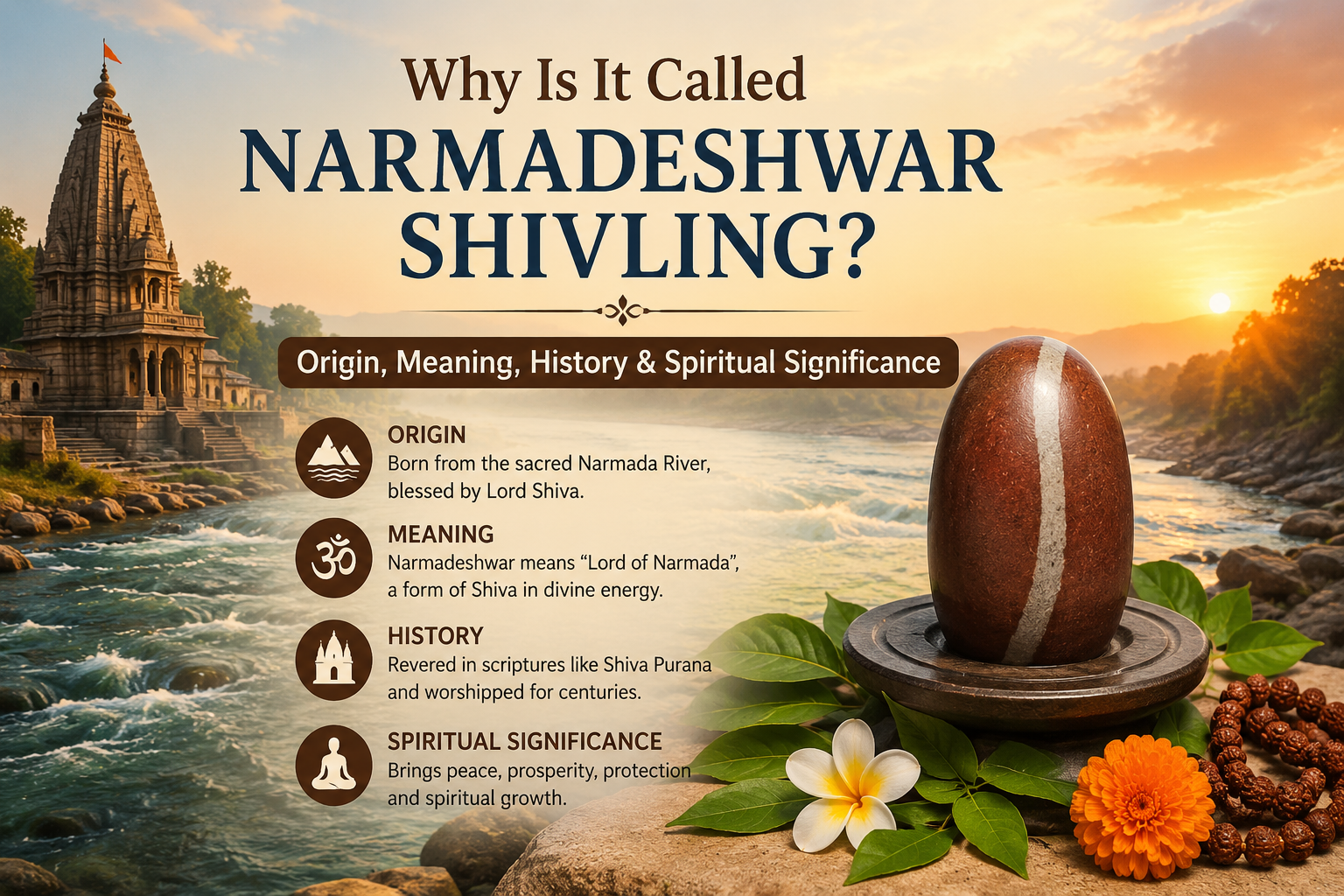
The Narmadeshwar Shivling is one of the most sacred and naturally formed Shivlings worshipped by devotees of Lord Shiva. But have you ever wondered why it is called "Narmadeshwar"? The name itself carries deep spiritual, historical, and geographical significance.
The word "Narmadeshwar" is derived from two Sanskrit words: "Narmada", the holy river of central India, and "Ishwar", meaning Lord Shiva. Together, the name translates to "Lord Shiva in the form found in the sacred Narmada River." Since these naturally formed Shivlings are discovered in the bed of the Narmada River, they are known as Narmadeshwar Shivlings.
Unlike man-made stone Shivlings, a Narmadeshwar Shivling is shaped naturally over thousands of years through the continuous flow of the Narmada River. The force of flowing water, sand, and rocks gradually polishes the stones into smooth, oval-shaped forms that closely resemble the traditional Shivling. Because of this unique natural formation, every Narmadeshwar Shivling is one of a kind.
According to Hindu scriptures and ancient beliefs, the Narmada River is considered one of the holiest rivers in India. It is believed that Lord Shiva blessed the river with the divine power that every naturally formed stone emerging from its waters would be regarded as a sacred Shivling. This belief is one of the main reasons why Narmadeshwar Shivlings hold such a special place in Hindu worship.
Devotees believe that keeping a genuine Narmadeshwar Shivling at home or in a temple brings peace, positivity, spiritual growth, and the blessings of Lord Shiva. Many traditions also consider these Shivlings highly auspicious because they are naturally created rather than carved by human hands.
Today, Narmadeshwar Shivlings are widely used for daily worship, temple installation, Rudrabhishek, Mahashivratri celebrations, and Shravan month rituals. Their natural beauty, unique patterns, and sacred origin make them one of the most revered forms of Shivling available for worship.

0 Comments